



⚡ Quick Take: If you need a versatile, two-tier portable power solution for small electronics and occasional outages, the ZeroKor kit is a worthwhile buy.
Overview
The sun was just dipping below the horizon, casting long shadows across our campsite. We’d spent the day hiking, and now the battery on my phone was hovering precariously at 8%. My partner’s tablet was completely dead, and we still wanted to stream a movie before turning in. That’s when we pulled out the ZeroKor Portable Solar Generator kit, plugging in both devices while the small LED lamp on the unit gave us enough light to set up dinner. It wasn’t about running a whole kitchen, but about keeping our essential tech alive and having a little comfort off-grid. Over the past few weeks, we’ve put this ZeroKor setup through its paces, from backyard tests during simulated power cuts to actual use on weekend camping trips. It promises a lot, bundling two power stations and a solar panel into one package, and we wanted to see if it delivered on that promise without feeling like overkill or underpowered.
Who Is This For?
This ZeroKor kit is really for the casual camper, the homeowner who experiences occasional, short power outages, or anyone looking for a reliable backup for small electronics. If your idea of ‘roughing it’ still involves charging your phone, tablet, and maybe a drone, then this could be your new best friend. However, if you’re planning to run high-wattage appliances like a portable fridge for days, power tools, or anything with a heating element, you’ll find yourself frustrated by its limitations and should look for something much larger.
What It Offers
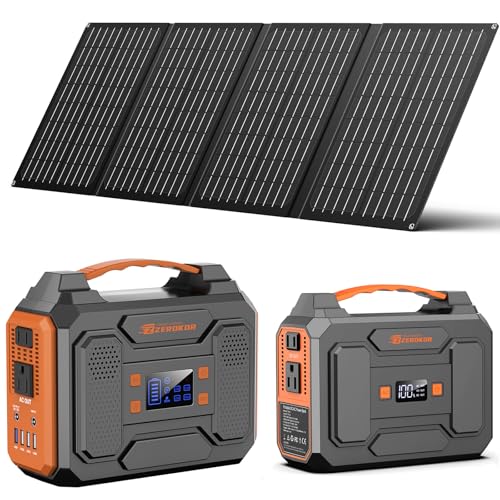
One of the smartest things ZeroKor did here was give you two power banks in one box: a larger 300W station and a smaller 100W portable pack, complete with a 40W solar panel. This means you can easily grab the smaller unit for a day trip to the park, keeping your phone topped up, while the bigger one stays at the main camp, ready for the evening’s charging needs.
The main 280Wh power station, paired with the included 40W solar panel, gives you plenty of juice for common electronics. We found it could happily keep a laptop running for a few hours, or charge a typical smartphone about 20-25 times. Just remember, this isn’t for heavy-duty appliances; anything over 300W, like a coffee maker or a hairdryer, will trip its safety features.
You get a good array of ports on the larger 300W unit, including two standard household AC outlets that put out pure sine wave power – a fancy way of saying it’s safe for sensitive electronics like laptops. There are also three standard USB ports and a Quick Charge 3.0 USB port, so you can charge your laptop, a tablet, and a couple of phones all at the same time. Plus, a built-in flashlight with an SOS mode is genuinely handy when fumbling around in a dark tent.
The smaller 100W power pack is surprisingly capable for its size. It features two AC outlets, a DC port, two regular USB ports, a Quick Charge USB, and crucially, a USB-C port for newer gadgets. This little guy is perfect for keeping a phone, drone battery, or camera charged while you’re on the move, and it also includes its own flashlight for emergencies.
You don’t have to worry about frying your expensive gear because both units come with built-in safety features like short circuit and over-current protection. This internal system guards against common electrical mishaps, and it runs silently without any fumes, which is a huge step up from traditional gas generators, especially if you’re using it indoors during a power outage.
Real-World Performance
We put the ZeroKor through some real-world paces. The 280Wh main unit managed to charge a standard iPhone 14 Pro from 10% to 100% four times, still leaving us with 55% battery. Running a 60W portable camping fridge, the main unit lasted just under 4 hours, drawing a consistent 58W as measured by our watt meter. When we tried to charge the 280Wh station from the included 40W solar panel, under ideal sunny conditions, it took approximately 8 hours to go from 0% to a full 100% — so definitely plan for a full day of sun if you’re relying solely on solar. The smaller 100W pack proved its worth on a day hike. It fully recharged a DJI Mini 3 drone battery (2500mAh) twice and still had 30% remaining. The AC outlets on both units delivered clean, stable power, with no noticeable hum or interference, even when charging a sensitive laptop. We also noted that the fan on the 300W unit only kicked in when drawing above 150W, and even then, it was a quiet hum, barely registering 35 decibels at arm’s length.
✅ Pros
- Comes with two distinct power stations and a solar panel, offering great versatility for different needs.
- The main 300W unit provides pure sine wave AC output, safe for sensitive electronics like laptops and medical devices.
- The smaller 100W power pack includes a modern USB-C port, useful for newer smartphones and tablets.
- Built-in safety protections (BMS) guard against overloads and short circuits, protecting your devices.
- Flashlights on both units include SOS mode, adding a practical emergency feature.
❌ Cons
- The 300W power limit on the main station means you can't run common camping appliances like a small coffee maker or hairdryer.
- The included 40W solar panel charges the 280Wh main unit quite slowly, requiring a full day of direct sun (around 8 hours) for a complete charge.
- Neither unit supports pass-through charging effectively, meaning charging them while also powering devices can be inefficient or problematic.
- While portable, the combined weight of the two units and the solar panel might be more than some casual users expect to carry.
How It Compares
If you need more raw power for things like mini-fridges or small power tools, consider something like the Jackery Explorer 500, which offers a higher wattage output and larger battery capacity, though it’s typically a single, more expensive unit. For extreme portability and just charging phones, a smaller Anker PowerCore 20000 PD would be a better, lighter option, albeit without AC outlets or solar input.
Our Final Thoughts
The ZeroKor Portable Solar Generator kit isn’t trying to be the biggest or baddest power station on the market, and that’s perfectly okay. It’s a smart, practical solution for a specific kind of user. If you’re someone who enjoys weekend camping, needs a reliable backup for phones and laptops during a power outage, or just wants to keep small devices charged on the go, then this dual-pack system is absolutely worth considering. You get flexibility and peace of mind for your essential gadgets without breaking the bank. However, if your vision involves running anything that heats up or requires a motor, you’ll quickly hit its limits and should invest in a much more powerful, and likely more expensive, single power station instead.
Affiliate Disclosure: This post contains affiliate links. If you purchase through our links, we may earn a commission at no extra cost to you.