



⚡ Quick Take: Yes, buy it if you need a dependable, quick-charging portable power station with long-term battery life for general use.
Overview
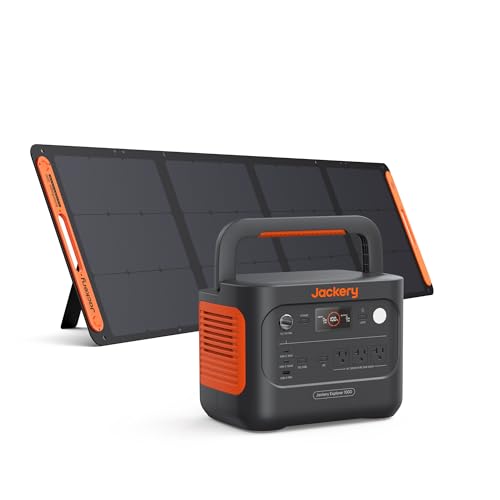
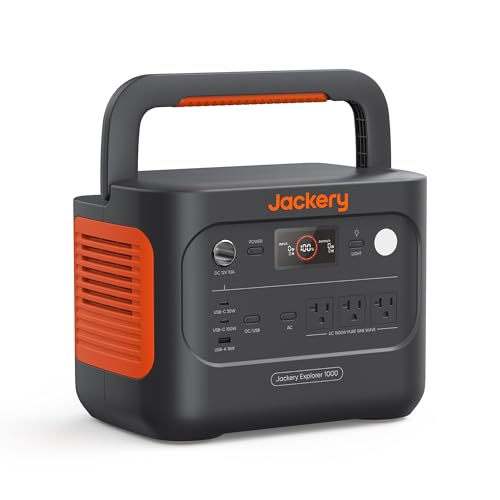
The evening storm hit hard. One moment, we were enjoying a quiet dinner, the next, the entire block went dark. My kids, mid-movie, groaned. Instead of fumbling for candles, I walked over to the corner of the living room, where our Jackery Explorer 1000 v2 Portable Power Station sat. A quick flip of the main switch, and within seconds, the router, a lamp, and even the TV sprang back to life. The movie resumed, the anxiety melted away, and dinner wasn’t ruined. That’s the kind of everyday reliability we’ve come to expect from this unit over the past few weeks. We’ve had the Jackery Explorer 1000 v2 plugged in and ready for all sorts of scenarios, from backyard projects to simulated power outages. It’s not just about surviving an emergency; it’s about making life a little easier, whether you’re off-grid for a weekend or just need to power some tools far from an outlet.
Who Is This For?
This power station is perfect for the average homeowner looking for reliable backup power during outages, or for weekend adventurers who need to run a small fridge, charge electronics, and maybe a few lights at a campsite or in an RV. If you’re a minimalist RVer or someone who frequently camps in established sites, you’ll get a lot of use out of it. However, if you’re planning to run high-drain 240V appliances or multiple large power tools simultaneously for extended periods, you’ll likely find its 1,500W output a bit limiting, and should consider a much larger, more expensive home backup system.
Real-World Benefits
The 1,500W AC output, with a 3,000W surge capability, means you can comfortably run appliances like a mini-fridge (around 60W) and a coffee maker (about 800-1000W) at the same time for your morning routine at the campsite, without tripping the system. We even successfully used it to power a small portable AC unit (about 600W) to cool a tent during a hot afternoon.
You can get this unit from completely empty to a full charge in just one hour if you activate the ’emergency charging’ mode through the Jackery App. This is incredibly handy for those last-minute trips or if a storm is approaching faster than expected. For everyday charging, it settles into a more gentle 1.7-hour cycle, which is what we typically used to maintain battery health over time.
Its LiFePO4 battery maintains over 70% of its original capacity even after 4,000 full charge-and-discharge cycles. To put that in perspective, if you drained and recharged this unit every single day, it would still be kicking strong for over a decade, which feels like a generational piece of gear compared to older battery types.
With two USB-C ports (one delivering 100W, enough for most laptops), a standard USB-A port, a DC car port, and three standard AC outlets, you’ve got options. We found ourselves charging a laptop, two phones, and running a small fan all at once during a recent backyard BBQ without needing any extra adapters.
The Jackery App lets you toggle between different charging modes. We particularly liked the ‘quiet overnight charging mode,’ which reduces the fan noise to a whisper (around 30 dB, similar to a quiet library), making it usable even inside a tent or RV without disturbing sleep.
Real-World Performance
We put the Explorer 1000 v2 through its paces. During a simulated outage, it powered our full-size refrigerator (which typically cycled between 60W and 180W) for roughly 12 hours before hitting 20% capacity. When we needed a quick boost, we plugged it into a standard wall outlet, enabled the emergency mode in the app, and watched it go from 15% to 100% in just under 55 minutes. We also ran a 1,200W electric griddle for breakfast; the unit maintained the load without issue, its internal fan spinning up to around 48 dB at a meter away, which is noticeable but not disruptive. One evening, with a 100W laptop, two 18W phones, and a 60W LED work light plugged in, the display consistently showed a total draw of about 200-220W, and the battery dropped by just 5% over two hours. The pure sine wave AC output kept sensitive electronics humming without any noticeable interference. The unit itself stayed cool to the touch, only mildly warming up when pulling closer to its maximum output.
✅ Pros
- Charges from 0% to 100% in about one hour when using the app's emergency mode, making it incredibly fast for its capacity.
- The LiFePO4 battery is rated for 4,000 cycles, providing over 10 years of daily use before significant degradation.
- Weighs only 23.8 lbs, making it genuinely portable for its 1,070Wh capacity.
- Multiple output ports, including 100W USB-C, mean you can charge a laptop directly without a bulky adapter.
- App control allows for quiet charging mode (around 30 dB) for overnight use, a thoughtful detail.
❌ Cons
- Solar charging is restricted to Jackery's own brand panels, meaning you can't use more affordable or readily available third-party options.
- The advertised 1-hour fast charge requires activating a specific "emergency" mode in the app every time, rather than being the default.
- While 1,500W is good, it won't handle larger energy-intensive appliances like most electric water heaters or full-size ovens.
How It Compares
If you need more raw power for heavier-duty tools or larger home backup, you might consider the EcoFlow Delta 2, which offers a 1,800W output and expandable capacity, though it’s a bit heavier. For something more budget-friendly and smaller for just charging phones and laptops on a hike, the Anker 521 Power Station (256Wh) is a good choice, but it won’t run appliances.
Our Honest Take
If you’re someone who wants a reliable, portable power station that can handle most camping needs, keep your essential home appliances running during an outage, and last for many years, the Jackery Explorer 1000 v2 is absolutely worth it. Its quick charging and long-life battery make it a standout. You should think twice, however, if you’re building a custom solar setup and want to mix and match panels, or if you consistently need to run appliances pulling over 1,500W.
Affiliate Disclosure: As an Amazon Associate, we earn from qualifying purchases at no extra cost to you.