


How to Plan a Travel Budget That Actually Works
Planning a trip is exciting, until you start adding up the cost of flights, hotels, meals, transportation, activities, and all the little expenses that seem to appear along the way.
The good news is that creating a travel budget doesn’t have to be complicated.
A good travel budget gives you a realistic idea of what your trip will cost before you book anything, helping you decide where to spend, where to save, and how much money you’ll actually need.
Here’s a simple way to build one.
1. Start With Your Destination and Dates
The destination and travel dates will have a major impact on your total cost.
A trip to New York City during a major holiday can cost dramatically more than the same trip during a quieter period. The same applies to international destinations, beach resorts, ski towns, and popular tourist cities.
Before building your budget, decide:
- Where you’re going
- How many people are traveling
- How many nights you’ll stay
- Your approximate travel dates
- Whether your dates are flexible
If your dates are flexible, check several combinations before booking. Even moving a trip by a day or two can sometimes change airfare and hotel prices significantly.
2. Estimate Your Flight or Transportation Costs
Transportation is often one of the largest parts of a vacation budget.
For flights, consider the total cost rather than just the advertised ticket price. Depending on the airline and itinerary, you may also need to account for:
- Checked baggage
- Carry-on fees
- Seat selection
- Airport transportation
- Parking
- Travel between connecting airports or terminals
If you’re driving, estimate fuel, tolls, parking, and potentially overnight accommodations along the route.
For some destinations, renting a car may make sense. For others, public transportation, rideshares, or walking may be considerably cheaper.
3. Set a Hotel Budget
Your accommodation budget should be based on your entire stay, not simply the nightly rate.
For example:
$150/night × 5 nights = $750
But the actual total could be higher after taxes, resort fees, parking, cleaning fees, or other charges.
When comparing hotels, look at the final price whenever possible.
You should also consider what is included. A slightly more expensive hotel that includes breakfast or has free parking may actually cost less overall than a cheaper room with additional daily expenses.
4. Create a Daily Food Budget
Food is one of the easiest travel expenses to underestimate.
Instead of trying to predict every meal, create a reasonable daily allowance.
For example:
| Expense | Daily Budget |
|---|---|
| Breakfast | $15 |
| Lunch | $20 |
| Dinner | $35 |
| Snacks & drinks | $10 |
| Daily total | $80 |
For a five-day trip, that would give you a food budget of approximately $400 per person.
Your actual number will depend heavily on the destination and how you travel.
Eating at local restaurants, cooking some meals, buying groceries, or choosing accommodations with breakfast included can all change the equation.
5. Don’t Forget Local Transportation
Once you arrive, you’ll still need to get around.
Depending on the destination, your transportation budget could include:
- Rental cars
- Gas
- Rideshares
- Taxis
- Public transportation
- Trains
- Buses
- Parking
- Airport transfers
One common budgeting mistake is calculating the flight and hotel costs while forgetting how much it will cost to actually get from the airport to your hotel and around the destination.
6. Budget for Activities
Make a list of the things you actually want to do.
For example:
- Museums
- National parks
- Tours
- Concerts
- Theme parks
- Sporting events
- Boat trips
- Attractions
- Guided excursions
You don’t necessarily need to budget for every possible activity. Start with the experiences that are important to you.
Then estimate the admission price and multiply it by the number of travelers.
It’s also worth checking whether attractions offer combination tickets, city passes, free days, or advance-purchase discounts.
7. Add a Miscellaneous Category
This is one of the most important parts of a travel budget.
There will almost always be expenses you didn’t anticipate.
Maybe you need an extra Uber. Maybe you buy a souvenir. Maybe you need sunscreen, a phone charger, medication, or an extra meal.
Instead of letting these expenses wreck your budget, create a miscellaneous travel fund.
A simple approach is to set aside an additional 5–15% of your expected trip cost.
For example, if your estimated trip costs $2,000, you could reserve another $100–$300 for unexpected expenses.
8. Put Everything Together
Once you’ve estimated each category, combine them into one trip budget.
Here’s an example for a five-night trip for two people:
| Category | Estimated Cost |
|---|---|
| Flights | $600 |
| Hotel | $750 |
| Food | $800 |
| Local transportation | $200 |
| Activities | $300 |
| Miscellaneous | $200 |
| Estimated total | $2,850 |
Now you have something much more useful than a collection of individual prices.
You have a target budget for the entire trip.
9. Compare Your Budget With Your Actual Spending Limit
This is where travel budgeting becomes really useful.
Suppose your maximum comfortable budget is $2,500, but your initial estimate comes to $2,850.
You don’t necessarily have to cancel the trip.
Instead, look for the categories where you have flexibility.
Could you:
- Travel on cheaper dates?
- Choose a less expensive hotel?
- Stay one fewer night?
- Rent a car for fewer days?
- Replace a few expensive meals?
- Choose free activities?
- Adjust your transportation options?
You can often reduce a trip’s total cost without eliminating the things that make the trip worthwhile.
10. Use a Travel Budget Planner
Doing all of these calculations manually can become tedious, especially when you’re comparing different destinations, dates, hotels, and transportation options.
That’s where a travel budget planner can help.
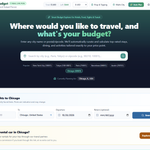
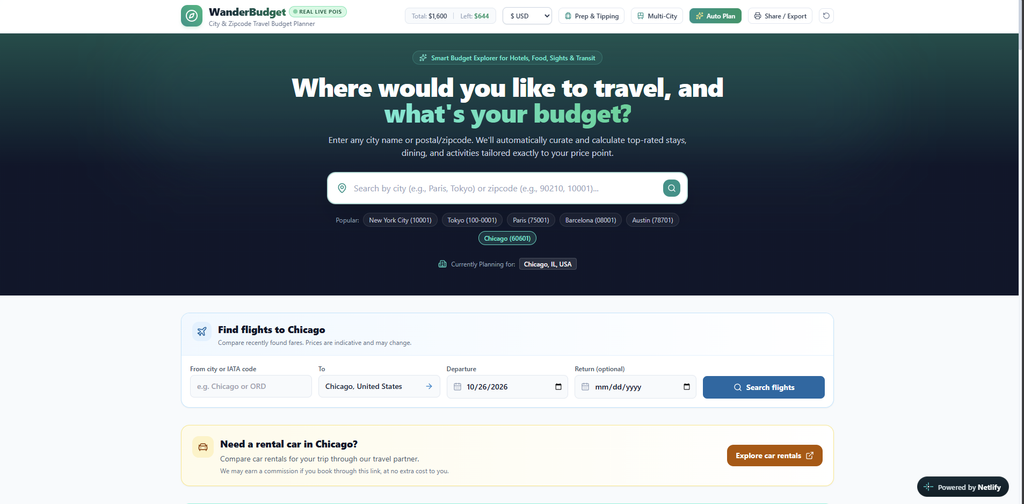
WanderBudget is designed to make it easier to estimate the cost of a trip and explore your options in one place.
You can use it to start planning your destination, transportation, accommodations, and other major travel expenses before committing to a booking.
Plan your trip with WanderBudget →
A Simple Travel Budget Formula
If you want a quick starting point, think of your trip as:
Transportation + Accommodation + Food + Activities + Local Transportation + Miscellaneous = Total Trip Budget
Once you have that number, you can compare it against what you’re comfortable spending.
The goal isn’t to predict every dollar perfectly.
The goal is to know whether the trip you’re planning fits your budget before you go.
Travel Budgeting Tips That Can Save Money
A few simple habits can make your budget go further:
Travel During Shoulder Season
Popular destinations often become significantly more expensive during peak travel periods.
If your schedule allows it, compare peak-season dates with shoulder-season dates.
Compare the Total Cost
Don’t automatically choose the cheapest flight or hotel.
A cheap hotel far from everything could result in significantly higher transportation costs.
Likewise, a cheaper flight with expensive baggage fees may not actually be the cheapest option.
Build Your Budget Before Booking
It’s easy to justify one expensive purchase at a time.
A $200 flight upgrade doesn’t seem outrageous by itself. Neither does a $50 dinner or another $100 excursion.
But several small upgrades can quickly turn a $2,000 trip into a $3,000 trip.
Create the overall budget first.
Leave Some Room for Fun
A travel budget shouldn’t mean eliminating everything enjoyable.
Leave some money for spontaneous experiences.
Sometimes the unplanned restaurant, attraction, or day trip ends up being one of the best memories of the trip.
Final Thoughts
A good travel budget doesn’t have to predict the future down to the last dollar.
It simply needs to answer one important question:
“What is this trip realistically going to cost me?”
By estimating transportation, accommodation, food, activities, local transportation, and unexpected expenses before you book, you can make better decisions and avoid unpleasant surprises when the credit-card bill arrives.
Start with your destination, build your estimated costs, compare your options, and adjust the trip until the numbers make sense.
Then you’re ready to travel.
Ready to see what your next trip could cost?


